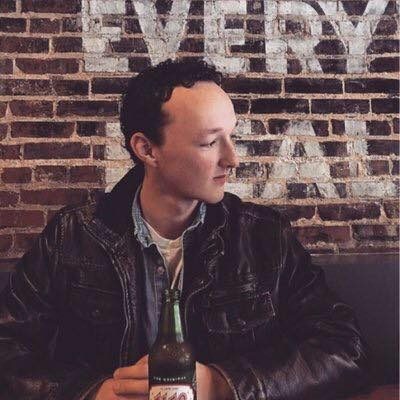

I drank red wine to celebrate 1,000 days of sobriety. Knelt at the altar rails of my I drank red wine to celebrate 1,000 days of sobriety. Knelt at the altar rails of my church, I held the cardstock-thin bread of Heaven under my tongue and, once my turn came, brought the common cup of salvation to my lips to wash it down.
Faith and sobriety in my life have found themselves in an accidental intersection. I quit drinking on February 28th, 2022, with no religious impulse or guidance. Saying God has nothing to do with my sobriety is probably not accurate, in retrospect, but that is certainly how I would have described it up until this past September. God had not been on my radar for nearly a decade.
I quit drinking because I found myself post-pandemic, after drowning my despair in as much red wine as I could guzzle for years on end, treating my most beloveds like nothing more than toys for my own amusement, face to face with a rueful paradox I think most sober people confront when they realize it’s time to quit: This is not who I am, and this is exactly who I have become.
After several months of attending a church regularly, I’ve been thinking more about the isolation that drove me toward alcoholism, and what role faith has in keeping up a journey that started well before faith was in any equation.
I grew up in an evangelical Southern Baptist church in rural Eastern Kentucky where there was functionally no other style of faith. Ages 13-16 were occupied by Sunday mornings and Wednesday nights playing worship music in a youth band at my church, and my weekdays before the first bell rang for classes to start were spent in the high school library co-leading our student prayer group.
Like just about everyone I know under the age of 40 with a similar background, I left the faith after months of deconstructing the reality of Christianity, and after growing deeply disturbed at the religion’s hatred toward LGBTQ+ people. I didn’t have the courage to tell anyone at my church about my feelings. So I just quietly slipped out, attending fewer and fewer services over time until my pew was empty, giving fully into unbelief.
A classic teaching of Christianity in all of its forms is that followers are expected to see Christ in the face of every single person. But the style of faith I was raised in teaches that every person is born into Original Sin, with their nature being pure evil.
One of the main reasons I left Christianity as a teen was because teaching an evil nature struck me as craven, cynical, and actually silly. I could count the number of people I know personally who seem even vaguely evil on one hand. Not to discount our penchant for selfishness, callousness, and laziness – but inherent evil? Give me a break.
More than anything, it felt condescending to others to be searching for Christ in people when doctrine dictated that Christ was nowhere to be found in the World. Anyone who grew up near Christianity knows how biting it is to hear someone say “I’ll be praying for you” in reaction to something as banal as getting a tattoo or skipping a church service. To live that condescension felt paternalistic at best, and immoral at worst.
And now, one of the main reasons I have found myself coming back to Christianity is an intuition, and now a church that affirms intuition, that the exact opposite is true: God doesn’t know how to do is be absent; God, Christ, is present in the very core of our souls whether we see him or not.
To look into someone’s eyes, then – anyone’s eyes – is to look in the eyes of Christ. Not some vague potential for Christ, not some hope that a craven, lost sinner will repent and change their ways at some point in the future; no, Christ is literally right there in front of you. People being made in the image of God is an unshakeable fact.
Alcohol is a staple in social settings, a central convener of connection for people at all stages of life from high school bonfires, college bar crawls, and Thanksgiving dinners both gratifying and grating.
At the height of my alcoholism in 2020 and 2021, wine was my strongest vice. I was drunk most nights during the COVID-19 lockdowns, but on Thursday nights, I would drink an entire bottle of blackberry wine while posting stupid Instagram stories sharing whatever thoughts I had about any number of mundane topics, doing my best to recreate some form of lighthearted connectivity that alcohol so often brings to people in-person.
I don’t have even one memory of any single message I exchanged with a friend, any joke I shared that did or didn’t land. All I remember was the sweet burn starting at the back of my throat and slithering down to my chest with every subsequent sip. And I remember how all of those nights ended: shedding tears enough to fill the wine bottle I emptied back up to the bottom of the cork. To whom much is given, much is required.
Unaccording to plan, alcohol atomized me. When I drank, my emotions overtook me to the point of possession while I was stripped away of all facilities to manage them. My isolation – from my communities, friends, families, all of the people whose absence I was mourning every single day – became not just the forefront of, but the totality of my existence. I guzzled my wine trying to suppress my loneliness and hoped that through banal Instagram interactions, the emotions that would overtake me would be joyful; but all that overtook me was my depression, despair, and the sense that the only thing that mattered was the only thing I could feel: my own pain.
I spent enough time drunk that the atomization spread like a blood infection throughout my being, whether I was drunk or not. My uncontrolled sadness grew into a severe selfishness. With my singular despair being the focal point of my life, every moving part of my environment became an action directed at me. The entire COVID-19 pandemic was the orchestration of a universe whose sole goal was crumbling my spirit. I could only view the world as if I was a target of every bit of momentum it was building, a supreme victim.
Jesus’s own disciples couldn’t recognize him before the Ascension. Caught in their own desperation after his crucifixion, they stared at him, looking him dead in the face, him standing right there in front of them, bewildered not by his radiating resurrected self, but by what they thought was a stranger.
I was no different. As lockdown regulations eased, bars and restaurants reopened, and those I had missed for over a year were now back in my sight, that selfishness led to me seeing the World as something at my disposal. I wasn’t asking how I could revive the fruitful relationships I had: I was asking instead, how could I grab the World’s momentum for my own pleasure? How could I build a life that maximized gratification after having a year and change where I felt joy was ripped away from me? My happiness was the primary casualty of the pandemic and by God, I was going to have full control of my life once we got out.
Even as I was moving back into social spaces, I was deeply alone. I was completely unable to, and frankly wholly disinterested in, sharing true connections with those around me. I could only look at them as experiences to be had that would, hopefully – alongside several glasses of merlot – lift me up out of despair.
There’s a section of the Episcopal Church’s catechism that consistently jumps out at me.
What is sin? Sin is the seeking of our own will instead of the will of God, thus distorting our relationship with God, with other people, and with all creation.
How does sin have power over us? Sin has power over us because we lose our liberty when our relationship with God is distorted.
Few things have given more language to what the hell I was up to as I kept drinking. I had lost my liberty to despair and to greed. At the same time, I know the actions that abused the trust of those around me were fully conscious and intentional, I also look back and see just how out of control of my life I was.
Choosing to be sober felt like the first choice I had made in years when I finally built the strength to choose it. All of the horrible hurts I inflicted on people closest to me – asking mom for money to “tide me over to the next paycheck” just to spend it at Liquor World; projecting all of my anger onto my then-girlfriend, centering her as the cause for a pain in me that she had absolutely no control or influence over just so I had someone to scream at; cheating on my now-wife with a friend on a night out, creating this huge rift in my friend group and nearly destroying a relationship that is now the most meaningful part of my life – didn’t even feel like choices at the time. I lost my liberty because I lost my commitment to love. I was so deep in the depths of Hell that I didn’t even realize that’s where I was.
Hell is no geographic afterlife, but where you find yourself when you are so deep in your own despair that you can’t see the image of God in even the people you love the most.
And what my faith and my church have reaffirmed is the central lesson I have tried to center in myself every day since I have quit drinking: every single person possesses, immediately, a divine essence so rupturous and earth-shattering, a unique capability of such acts of love powerful enough as to leave you god-shocked.
To state the obvious, religion is not a prerequisite to having a strong moral code to live by. But it can provide a structure to keep that code front and center. Prayers to repeat, seeking a divine energy to try and channel in your lowest and highest moments, rituals to refocus your attention, all help orient you in the direction of love.
Christian Wiman, an author whose work I recently have been obsessive over, writes “this is how you ascertain the truth of a spiritual experience: it propels you back toward the world and other people, and not simply more deeply within yourself.” Trying to incorporate those experiences as a regular part of life is an effort to propel a better you into the World outside.
I was extremely hesitant to partake in communion for the first several weeks of my church attendance. Most pertinent here, though, is the use of real wine as the blood of Christ. No one at the church would bat an eye if I did not drink. But for weeks and weeks, I felt a call to take both the bread and the wine.
It took me a while to discern whether that was a spiritual impulse or a craven one. The only panic attack I have ever had in my life was in reaction to drinking an Old Fashion mocktail that tasted too much like bourbon, my other strongest vice alongside red wine. What on earth would happen if I had even the smallest sip of red wine?
A moment of acceptance came to me during this sermon: if I believe that God is present in every single person, I must figure out a way to believe that about myself.
So I soon walked down the aisle, knelt at the altar rail, held the cardstock-thin bread of Heaven under my tongue and, once my turn came, brought the common cup of salvation to my lips to wash it down. That same burning-sweet shock of the nerves ran down my throat to my chest like it had so many years ago.
But when I stood up and walked back to my pew, throat still alight, looking at the faces of attendees – most of whom I still don’t know – I saw Christ bursting out like he must have in front of the disciples before he ascended into the heart of all creation. He was right there in front of me, deep in the eyes of everyone I saw.
The very drink that had driven me further within myself – atomized every experience I had, curdled my core so thoroughly that I could not see the image of God, even in the people I loved most – was now something that propelled me out toward the world and brought me closer to those around me than I have ever felt before. Somehow, God had reached right into the core of my being via my oldest vice, grabbed all of the illusions of myself that I hate most, and twisted them fully around into illusions of myself that could reorient me in the direction of love. All things were made new. ❖
A quick note: I feel comfortable and confident calling myself sober while having a sip of wine in this one specific, religious ceremony. I do not intend, and hope this doesn’t come off as, anything even adjacent to advice about how people in recovery should blanket-approach alcohol in instances like this.
 Adrian Paul Bryant